
How to Choose the Right Stainless Steel Baby Coil for Industrial Applications
Date : Jun 01, 2026The selection of the right stainless steel baby coil is an essential factor to ensure optimum manufacturing performance, reduce material wastage and manufacture quality products. The stainless steel baby coils are commonly used in many industries for the production of baby coils, tube production, kitchenware manufacturing, precision engineering and industrial processing.
But using the incorrect grade, thickness, finish or tolerance can create corrosion problems, machining issues, delays in production and increased operating expenses.
This guide details the procedure for selecting the suitable stainless steel baby coil according to industrial requirements, applications, and technical aspects.
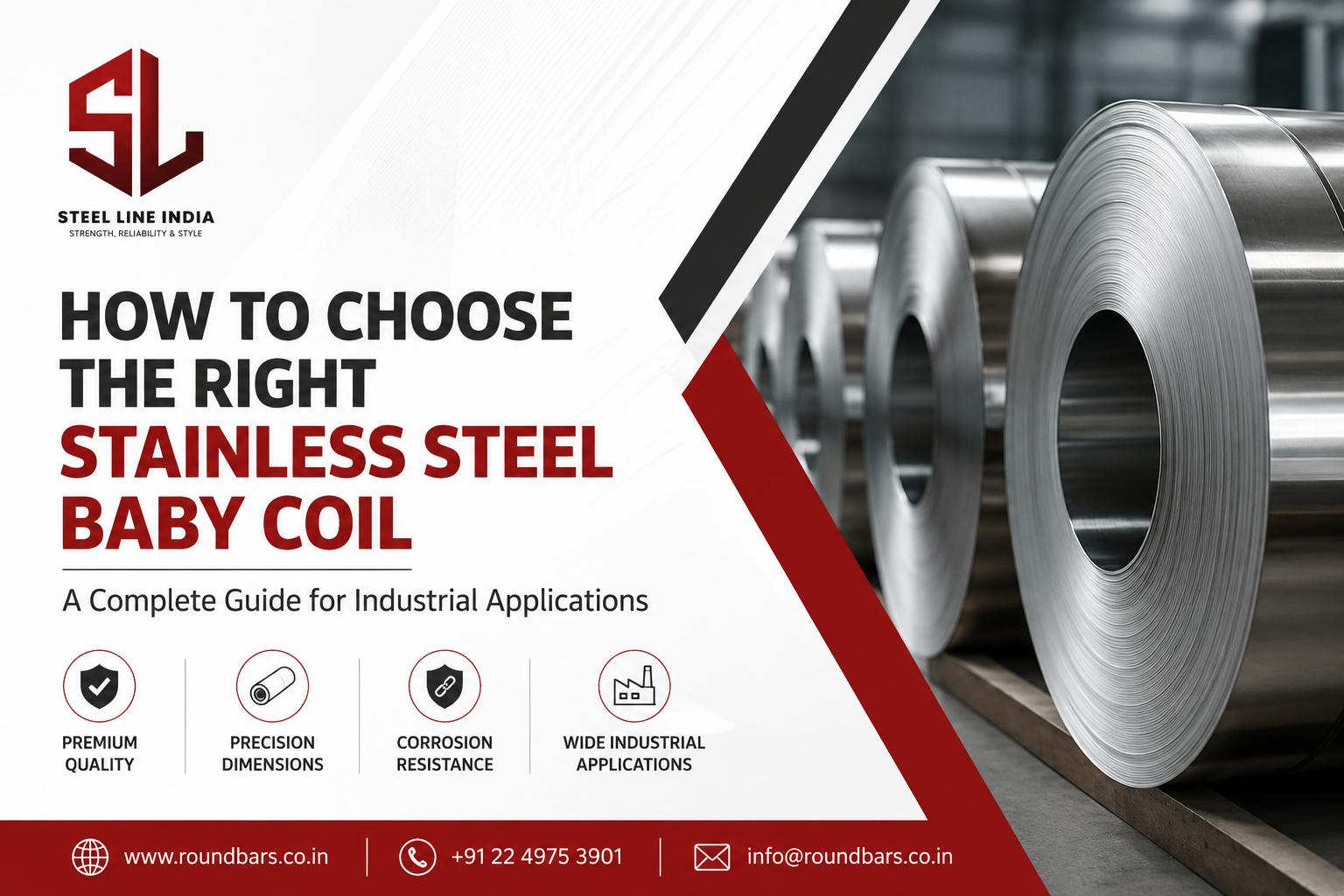
What Is a Stainless Steel Baby Coil?
A stainless steel baby coil is a narrow slit coil that is manufactured from larger coils of stainless steel. The coils are commonly used in the industry where precision processing, easy handling and customized width are required.
Baby coils are available in different:
- Grades
- Thicknesses
- Widths
- Surface finishes
- Hardness levels
They are commonly used in:
- Tube mills
- Fabrication industries
- Kitchen equipment manufacturing
- Automotive components
- Precision engineering
- Industrial machinery
Important Factor to Consider Before Choosing a Stainless Steel Baby Coil
1. Select the Right Stainless Steel Grade
The grade determines corrosion resistance, strength, heat resistance, and application suitability.
Common Stainless Steel Grades for Baby Coils
| Grade | Features | Common Applications |
|---|---|---|
| SS 304 | Excellent corrosion resistance | Kitchen equipment, fabrication |
| SS 316 | Better chemical & marine resistance | Chemical plants, marine industry |
| SS 202 | Cost-effective option | Decorative applications |
| SS 430 | Magnetic stainless steel | Appliances & automotive |
| SS 409 | Heat resistant | Exhaust systems |
How to Choose the Correct Grade
- For general industrial use → SS 304
- For marine or chemical exposure → SS 316
- For economical applications → SS 202
- For heat resistance → SS 409
- For magnetic requirements → SS 430
Choosing the correct grade helps increase durability and reduce maintenance costs.
2. Choose the Correct Coil Thickness
Thickness selection directly impacts:
- strength
- flexibility
- weldability
- forming capability
Thin Gauge Coils
Used for:
- precision components
- kitchen products
- lightweight fabrication
- Medium Thickness Coils
Used for:
- Industrial fabrication
- Structural applications
- Machinery parts
- Heavy Thickness Coils
Used for:
- heavy-duty engineering
- pressure applications
- industrial equipment
Always choose thickness according to the final product requirement and load conditions.
3. Check Width Accuracy and Tolerance
In precision manufacturing industries, tolerances are vital for the width.
Poor width accuracy may cause:
- production issues
- fitting problems
- excess wastage
- machine alignment errors
Tube manufacturing and CNC processing factories need to have slit width baby coils to ensure the normal production process.
4. Select the Right Surface Finish
Surface finish affects:
- appearance
- corrosion resistance
- hygiene
- fabrication quality
Common Stainless Steel Coil Finishes
| Finish | Characteristics | Applications |
|---|---|---|
| 2B Finish | Smooth & reflective | Industrial use |
| BA Finish | Bright annealed finish | Decorative products |
| Matt Finish | Non-reflective finish | Fabrication |
| No.4 Finish | Brushed texture | Kitchen equipment |
Which Finish Should You Choose?
- For decorative use → BA or No.4
- For industrial fabrication → 2B
- For matte appearance → Matt Finish
5. Consider Corrosion Resistance Requirements
Different industries require different corrosion resistance levels.
Applications Requiring High Corrosion Resistance
- marine industry
- chemical plants
- pharmaceutical equipment
- food processing
- coastal applications
For these industries, SS 316 baby coils are generally preferred because of their superior resistance to chemicals and moisture.
6. Understand Hardness and Temper Requirements
The hardness level affects:
- bending
- forming
- welding
- machining performance
Soft Temper
Best for:
- deep drawing
- bending
- forming applications
Hard Temper
Best for:
- structural strength
- spring applications
- wear resistance
Selecting the wrong temper may lead to cracking or fabrication issues.
7. Verify Edge Quality
Edge condition is very important in slit baby coils.
Poor edge quality may cause:
- burr formation
- cracking
- safety issues
- machine damage
Common Edge Types
- Mill Edge
- Slit Edge
- Deburred Edge
Precision industries usually prefer burr-free slit edges for safer and smoother processing.
8. Check Material Certifications
Before purchasing stainless steel baby coils, always ask for:
- Mill Test Certificate (MTC)
- chemical composition report
- mechanical property report
- grade verification
- quality inspection details
Material certification ensures product authenticity and industrial compliance.
9. Evaluate Coil Weight and Handling Requirements
Choosing the correct coil weight improves:
- machine loading efficiency
- transportation
- storage
- production handling
Baby coils are preferred because they are easier to handle compared to large mother coils.
10. Choose a Reliable Stainless Steel Baby Coil Supplier
A trusted supplier helps ensure:
- consistent quality
- accurate dimensions
- proper packaging
- timely delivery
- export standards compliance
Before selecting a supplier, check:
- industry experience
- product range
- quality standards
- customization capability
- customer support
Common Mistakes to Avoid While Buying Stainless Steel Baby Coils
Choosing Based Only on Price
Low-cost material may compromise quality and performance.
Ignoring Surface Finish
Incorrect finish may affect product appearance and corrosion resistance.
Not Checking Tolerance Accuracy
Poor tolerance can create fabrication and assembly issues.
Selecting the Wrong Grade
Wrong material selection can reduce product lifespan.
Ignoring Certifications
Always verify material authenticity before purchase.
Industries Using Stainless Steel Baby Coils
Stainless steel baby coils are widely used in:
- Tube manufacturing
- Automotive industry
- Kitchen equipment manufacturing
- Pharmaceutical industry
- Food processing plants
- Precision engineering
- Industrial fabrication
- Chemical processing industry
- Construction sector
- Decorative applications
Why Stainless Steel Baby Coils Are Preferred in Manufacturing
Stainless steel baby coils are preferred by the manufacturers because they provide:
- excellent corrosion resistance
- easy processing
- precision width control
- better handling
- reduced material wastage
- improved production efficiency
- superior surface finish
- high durability
These advantages make baby coils suitable for various industrial applications.
Conclusion
When selecting a stainless steel baby coil, consider the following elements:
- grade
- thickness
- width tolerance
- surface finish
- corrosion resistance
- hardness
- edge quality
By understanding these technical needs, industries can improve production stability and reliability, and increase the longevity of machines.
Stainless steel baby coils are supplied by experienced, qualified manufacturers and distributors to meet the required specifications and provide technical support for industrial applications.
FAQs